
Monsoon Care Tips for Your Faber Chimney and Hob

Introduction: Why Monsoon Needs Special Faber Chimney and Hob Care
Monsoon season in India brings relief from summer heat, but it also brings 70–90% relative humidity into most kitchens. That moisture doesn't stay outside — it settles into your chimney filters, hob ignition points, and control panels.
Unlike dust or grease, humidity damage is often invisible until a burner won't light or a chimney motor starts sounding rough. These Monsoon Care Tips for Faber Chimney and Hob appliances are based on the actual service calls we handle every year between June and September across Indian cities.
This guide covers exactly what monsoon does to your appliances, how to spot early warning signs, and the specific maintenance steps that prevent a breakdown before it happens.
The Problem: How Monsoon Affects Kitchen Appliances
During monsoon, three things happen inside a typical Indian kitchen at the same time:
- Ambient humidity rises sharply, so surfaces stay slightly damp for longer.
- Windows and exhaust vents stay shut more often, trapping moisture indoors.
- Cooking frequency often increases (comfort food, tea, pakoras), adding more grease and steam to the mix.
Combined, this creates the exact conditions that cause corrosion, ignition failure, and reduced suction — the three complaints that spike every monsoon season.

Causes: Why Faber Chimneys and Hobs Struggle in Monsoon
1. Filter Corrosion from Trapped Moisture
Stainless steel mesh and baffle filters resist rust under normal conditions, but constant humidity combined with grease creates a film that holds moisture against the metal. Over weeks, this leads to surface rust and reduced filtration.
2. Ignition Point Dampness
Hob spark plugs and ignition switches are sensitive to even small amounts of moisture. A humid kitchen means the air around the burner never fully dries, so ignition becomes weak or inconsistent — especially on the first cook of the day.
3. Reduced Motor Efficiency
Chimney motors draw in humid air along with smoke, and condensation can form inside the duct and motor housing. This adds resistance, making the motor work harder and run louder than usual.
4. Electrical Panel Moisture
Touch-control panels and auto-clean buttons are exposed to condensation dripping down from the chimney body, which can cause unresponsive buttons or display glitches.
5. Slower Drying After Cleaning
In dry weather, a wiped-down hob or filter dries in minutes. During monsoon, the same surface can stay damp for an hour or longer, extending the window in which moisture-related faults happen.
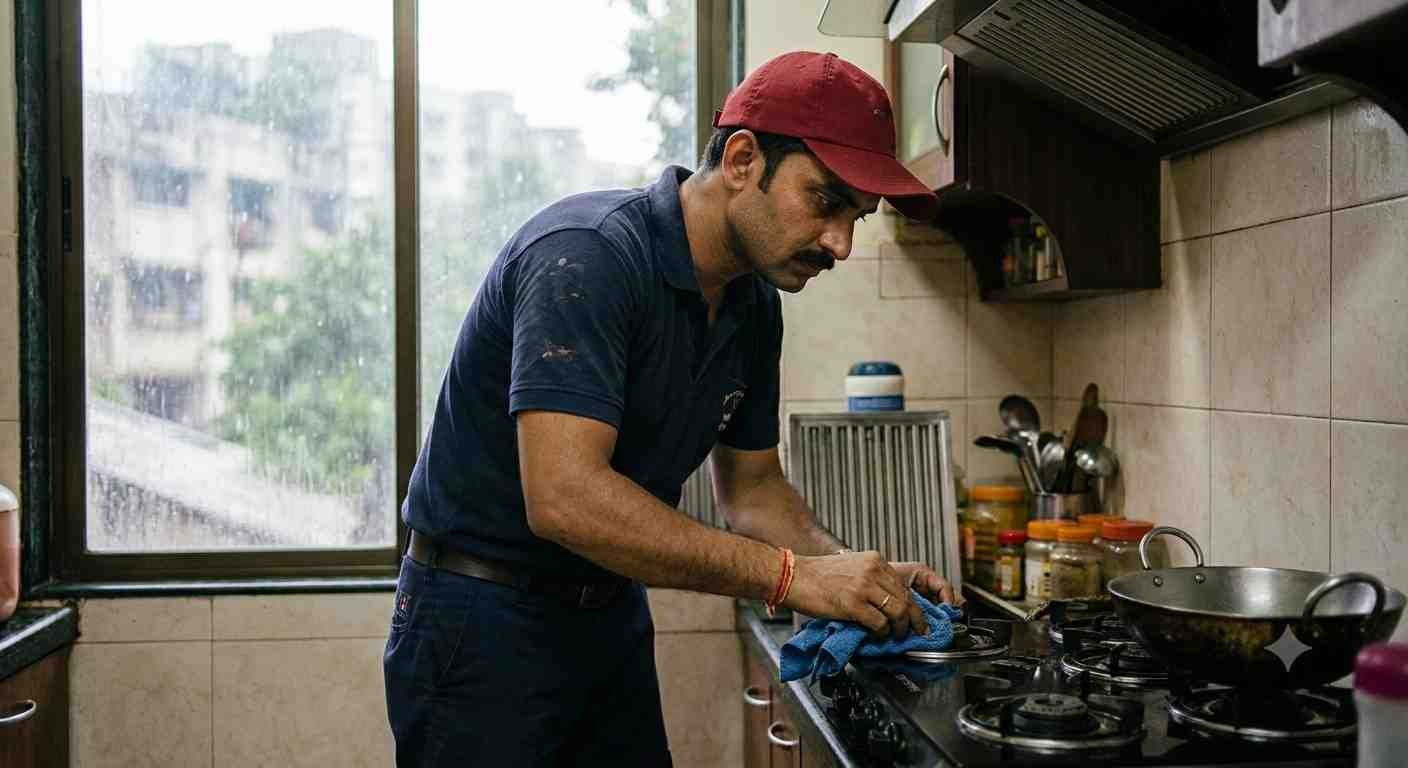
Solutions: Monsoon Care Tips for Faber Chimney and Hob Appliances
Dry Filters Completely Before Reinstalling
After washing chimney filters, let them air-dry fully — ideally overnight — before putting them back. Reinstalling a damp filter is one of the fastest ways to trigger rust during monsoon.
Wipe Ignition Areas Dry Daily
Before the first cook of the day, wipe the area around the hob's spark plug and ignition knob with a completely dry cloth. This single habit prevents most monsoon ignition complaints.
Run the Chimney for a Few Extra Minutes
Let the chimney run for 3–5 minutes after cooking instead of switching it off immediately. This clears residual humid air from the duct and motor housing.
Keep the Kitchen Ventilated Between Uses
Even a small gap in a window or exhaust point for 15–20 minutes after cooking helps release trapped humidity instead of letting it settle back onto appliance surfaces.
Schedule a Pre-Monsoon Service Check
A technician visit before monsoon peaks lets us check filter condition, ignition components, and motor housing while problems are still minor and inexpensive to fix.
Avoid Covering Appliances with Plastic Sheets
Plastic covers trap moisture underneath rather than keeping it out, which can worsen corrosion. A breathable cloth cover is a safer choice if you want to protect the surface from dust.
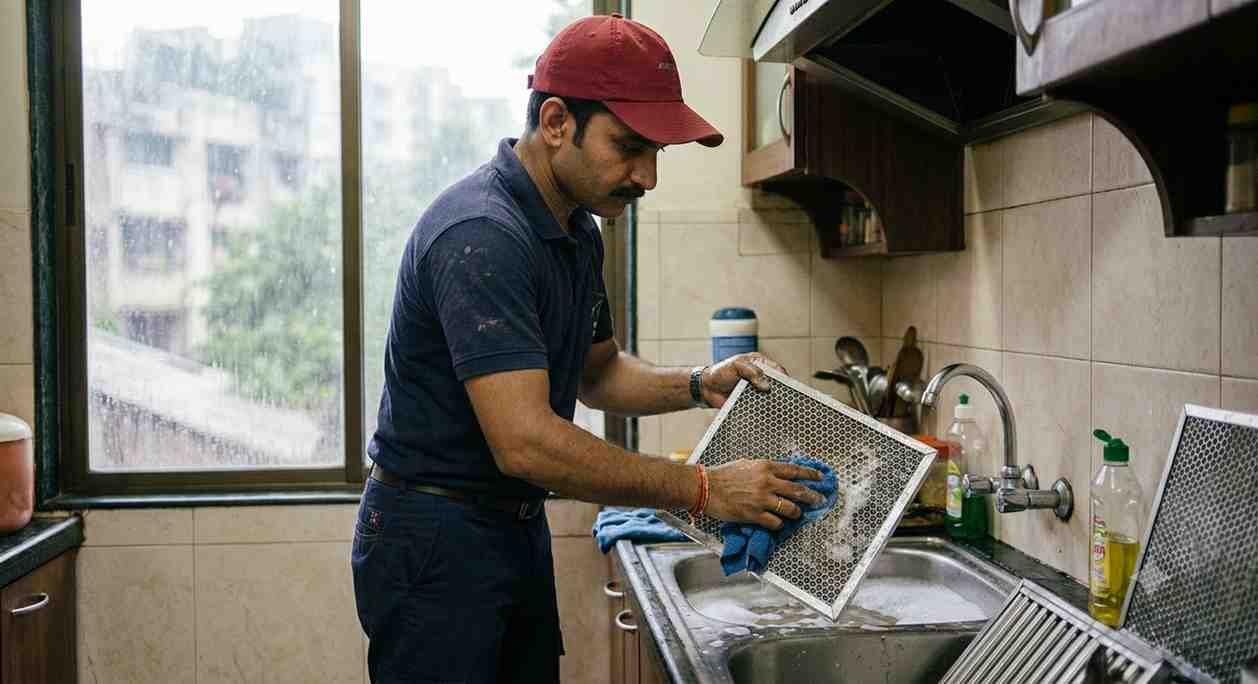
Comparison Table: Monsoon Issue vs. Fix vs. Frequency
| Monsoon Issue | Recommended Fix | How Often | DIY Safe? |
|---|---|---|---|
| Filter rust/corrosion | Dry fully before reinstalling | Every wash | Yes |
| Weak hob ignition | Wipe ignition area dry | Daily | Yes |
| Motor strain/noise | Run chimney extra 3–5 mins post-cooking | Every use | Yes |
| Panel unresponsive | Wipe condensation, avoid direct water contact | Weekly | Yes |
| Duct condensation buildup | Professional duct inspection | Once pre-monsoon | No |
| Persistent ignition failure | Spark plug/switch check by technician | As needed | No |
Expert Tips for Long-Term Monsoon Protection
- Replace hob sparker batteries just before monsoon starts, since weak batteries fail faster in humidity.
- Keep a silica gel sachet near the control panel area to absorb ambient moisture.
- Avoid cooking with the kitchen door fully closed for long hours — some airflow helps humidity escape.
- Check the exhaust duct outlet outside the house to ensure rainwater isn't seeping back in.
- Book an annual monsoon maintenance visit rather than waiting for a visible fault.
Frequently Asked Questions About Monsoon Chimney and Hob Care
Why does my chimney smell musty during monsoon?
A musty smell usually means moisture is trapped in the filter or duct along with grease residue, creating a damp environment where odor builds up. Cleaning and fully drying the filter typically resolves it.
Can monsoon humidity really stop my hob from igniting?
Yes. Moisture around the spark plug or ignition switch can weaken or block the spark entirely, which is why hobs often show ignition trouble specifically during the rainy months.
Should I clean my chimney filter more often in monsoon?
Yes, cleaning every 2 weeks instead of monthly is a good practice during monsoon, since humidity speeds up grease buildup and corrosion risk on filter surfaces.
Is it safe to use a hairdryer to dry hob or chimney parts?
A hairdryer on a cool or low setting can help speed up drying of external surfaces, but it should never be used directly on electrical components or wiring.
When is the best time to book a monsoon maintenance service?
The ideal time is just before monsoon arrives, typically late May to early June, so any worn parts are replaced before humidity levels peak.
Summary: Protecting Your Faber Chimney and Hob This Monsoon
Monsoon Care Tips for Faber Chimney and Hob appliances come down to controlling moisture: dry filters fully, wipe ignition points daily, keep the kitchen ventilated, and book a pre-monsoon check-up. These simple habits prevent the corrosion, ignition failure, and motor strain that spike every rainy season.
Book Your Faber Monsoon Maintenance Service
Don't wait for a breakdown mid-monsoon. Our authorized technicians inspect filters, ignition components, and motor housing to monsoon-proof your Faber chimney and hob.
📞 Call Toll-Free: 1800-267-1544
💬 WhatsApp: +91 90764 65746
🔧 Book a Service Appointment
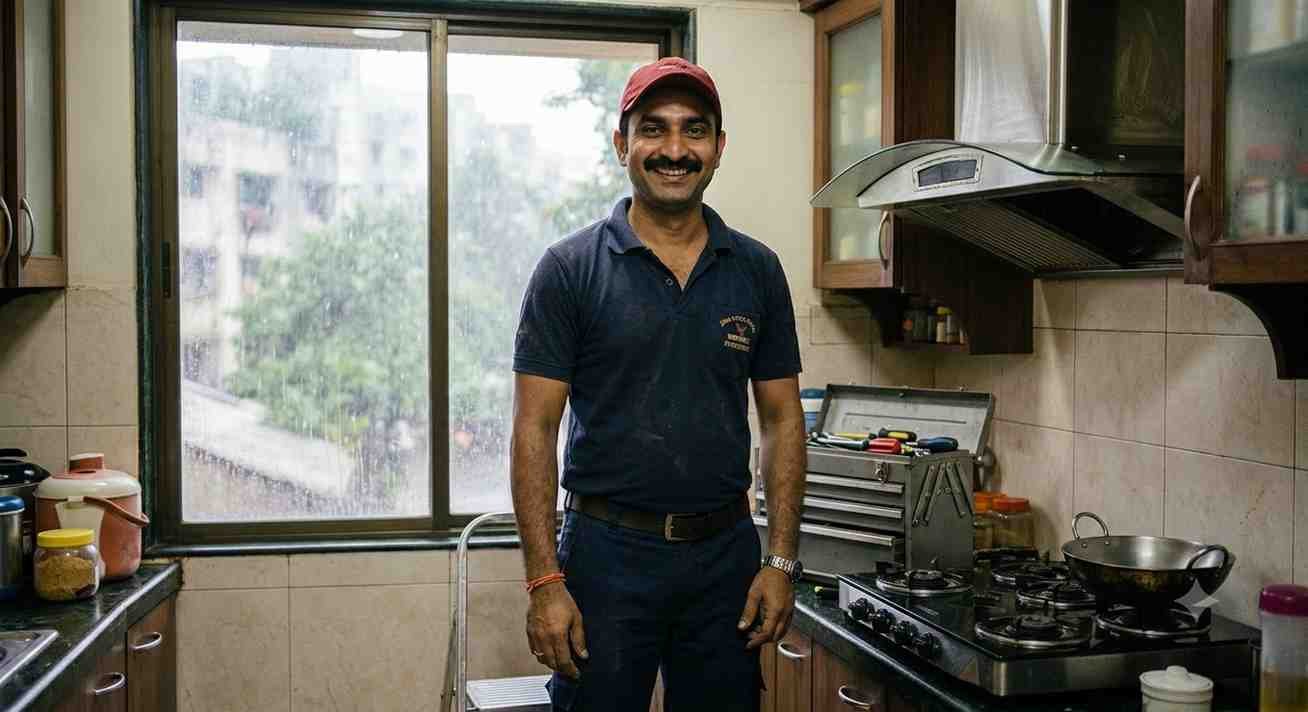
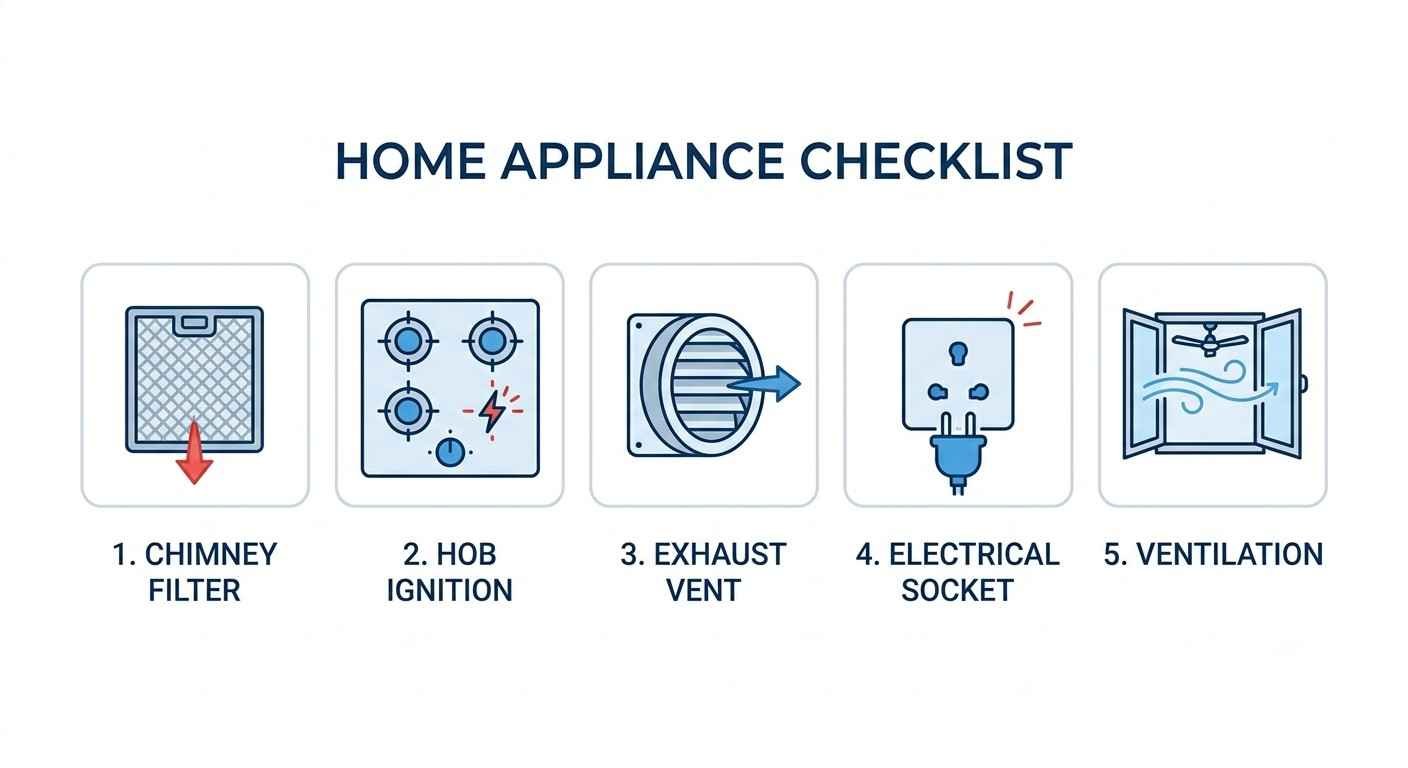
Monsoon Maintenance Checklist at a Glance
Related Services
Related Blogs
- Faber Auto Ignition Hob Repair: 7 Proven Fixes for Common Issues
- Faber Hob Repair Service: Burner, Ignition & Gas Leak Fix at Home
- Faber Service Near Me – Fast Chimney & Hob Repair at Home
External References
- India Meteorological Department (IMD) — official monsoon and humidity data
- Bureau of Indian Standards (BIS) — home appliance safety standards